Blog > Your Home’s Secret Price Tag: 6 Counter-Intuitive Staging Moves for a Top-Dollar Sale
Your Home’s Secret Price Tag: 6 Counter-Intuitive Staging Moves for a Top-Dollar Sale
by
1. Introduction: The High Cost of a "Lived-In" Look
In high-end real estate, the transition from "home" to "marketable asset" is a delicate psychological shift. Sellers often grapple with the friction of detaching from a personal history, while buyers are searching for a clean slate upon which to projected their own futures. The empirical evidence is clear: professional staging is the essential bridge between a property’s past and its financial future.
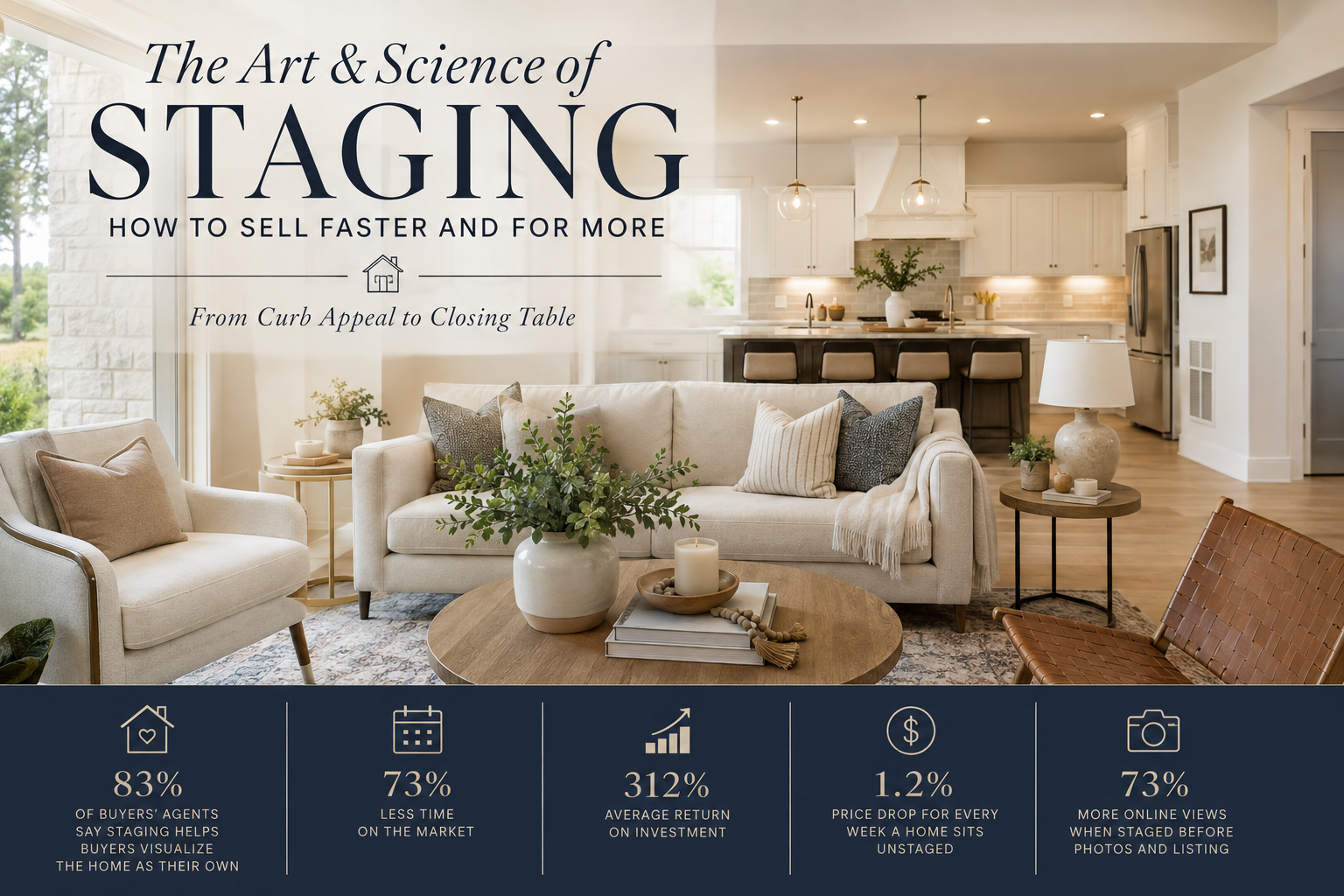
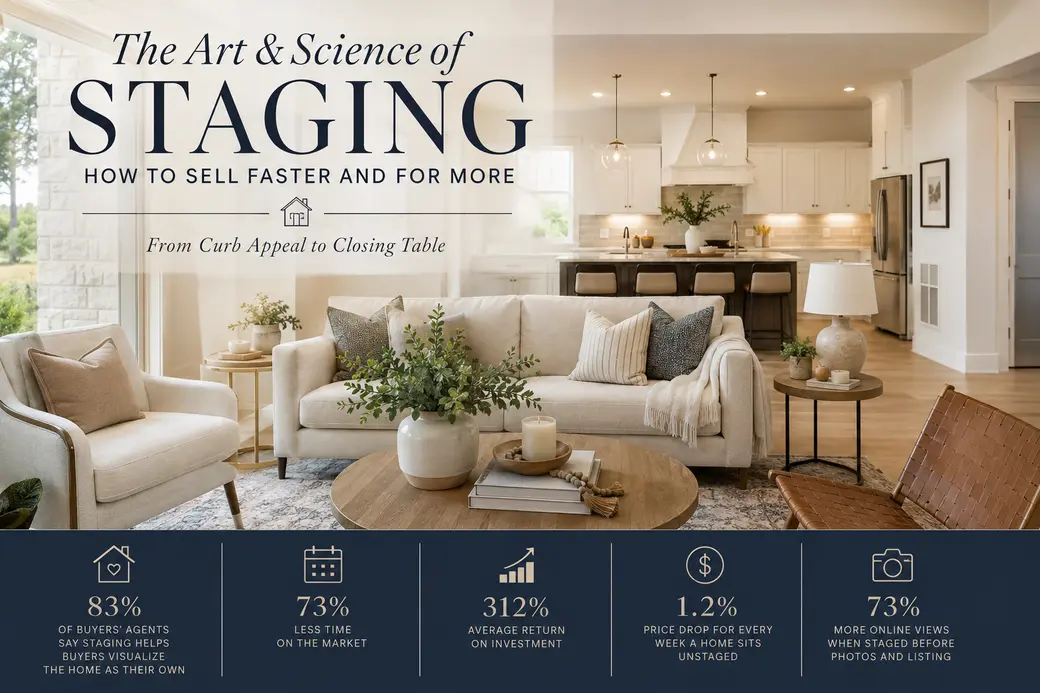
According to recent data, 83% of buyers’ agents confirm that staging makes it significantly easier for clients to visualize a property as their own. Beyond mere aesthetics, the efficiency of this move is undeniable—staged homes spend an average of 73% less time on the market. In the following sections, we move beyond the stress of listing to the science of selling, treating your home not as a collection of rooms, but as a strategic investment.
2. The 312% Return: Why Staging is a Financial Strategy, Not a Decorating Choice
Staging is often dismissed as an optional flourish, yet it remains one of the most potent financial levers available to a seller. The primary objective is to mitigate the "cost of delay." Data shows that for every week a home sits on the market unstaged, the final sale price erodes by an average of 1.2%. On a $500,000 property, a single week of hesitation translates to a $6,000 loss—a figure that far exceeds the cost of a professional staging consultation.
With an average return on investment (ROI) of 312%, staging serves as a defensive wall for your home's equity. This isn't just about "prettying up" a space; it’s about manipulating the emotional chemistry of a walkthrough to secure a premium offer.
"58% of buyers’ agents confirm staging positively influenced most buyers' view of the home."
3. The "Football Rule" and the 50% Closet Myth
Sophisticated decluttering is an exercise in managing the buyer's perception of value. When a buyer encounters clutter, they subconsciously "down-price" the square footage of the home. To combat this, pros utilize the "Football Rule": if an item is smaller than a football, it is visual noise and must be removed.
Counter-intuitively, this rule extends to the interiors of your storage. You must maintain closets at only 50% capacity. While it may feel wasteful to leave storage empty, an overflowing closet is a "red flag" that signals a fundamental lack of space, regardless of the actual square footage. Furthermore, a professional "spatial narrative" requires a focus on security and anonymity. Beyond depersonalizing, you must move name-bearing documents, prescription medications, valuables, and firearms off-site. This protects your privacy while allowing the buyer to focus on the home’s potential rather than the current owner's identity.
4. The Curb Appeal Filter: Why 44% of Buyers Never Step Inside
In the digital-first era, curb appeal acts as the ultimate top-of-funnel filter. A staggering 44% of potential buyers will drive by a property after viewing it online and decide not to enter for a walkthrough based solely on the exterior presentation. If the façade fails, the rest of your staging efforts are moot.
To pass this filter, look for high-impact "insider" choices. For instance, always opt for black mulch over red; black is perceived as more modern, cleaner, and less distracting from the home’s architectural lines. Combine this with the low-cost, high-ROI actions of power-washing the siding and replacing the front door mat. These small investments ensure the buyer moves from the curb to the foyer, where the emotional closing begins.
5. The Kitchen Focal Point: Maximizing the 6.4x ROI
The kitchen is the most scrutinized room in any home, offering a remarkable 6.4x cost-effectiveness ratio. Because kitchens are the most expensive rooms to renovate, an unpolished one invites buyers to "propose a massive discount" based on imagined repair and modernization costs. Staging here is less about renovation and more about projecting a lifestyle of luxury and care.
One of the most effective professional secrets is a lighting overhaul: ensure every fixture uses matching Kelvin-scale daylight bulbs (ideally in the 3000K–4500K range). This avoids the "patchwork" look of mismatched temperatures and makes the space feel expansive. Countertops should be barren except for a single, intentional accessory—a high-quality wooden cutting board or a simple vase of fresh flowers.
"A gleaming kitchen makes a house feel loved."
6. The "Floating Furniture" Illusion: Why Pulling Rugs and Sofas Away from Walls Works
Standard furniture placement often involves pushing pieces against walls to "save space," but this actually highlights the room's boundaries and makes it feel smaller. To create a superior sense of flow, pull sofas and rugs away from the walls toward the center of the room. This "floating furniture" technique creates symmetrical seating arrangements that emphasize focal points like fireplaces.
For a truly pro-level design trick, place your largest furniture piece in the far-left corner relative to the entry. This draws the eye to the deepest point of the room, creating an immediate illusion of depth and increased square footage. By removing bulky, unnecessary pieces and prioritizing "navigational flow," you allow buyers to focus on the layout's possibilities rather than feeling cramped by your current furniture choices.
7. Virtual vs. Physical Staging: The Hybrid Solution for the Digital-First Market
There is a frequent debate regarding virtual versus physical staging, but the modern gold standard is a hybrid approach. The data is indisputable: properties staged before photography and listing generate 73% more online views than those staged after marketing has already begun. Whether you use digital enhancements or physical furniture, the goal is to dominate the online search.
However, while virtual staging captures the "click," physical staging is what captures the heart. It provides the tactile and emotional connection required to convert a showing into a contract. For the most effective strategy, utilize virtual staging to polish the initial digital presentation, and lean on light physical staging—focusing on the kitchen, living room, and primary suite—to secure the deal during the walkthrough.
8. Conclusion: Moving Beyond the "To-Do" List
Ultimately, the goal of staging is to remove the "mental to-do list" from the buyer's mind. Every scuff, pile of clutter, or outdated fixture is a line item on an imaginary invoice the buyer is tallying as they walk through your home. By presenting a neutral, pristine, and curated environment, you allow them to stop calculating costs and start imagining their life.
Staging is about shifting the narrative from your history to the buyer’s future. If you are planning a move in the next 3 to 12 months, take a hard look at your current presentation. Is your home currently telling your story, or the buyer's?
GET MORE INFORMATION

Andrew McDonald
Real Estate Agent License ID: 795292
Real Estate Agent License ID: 795292